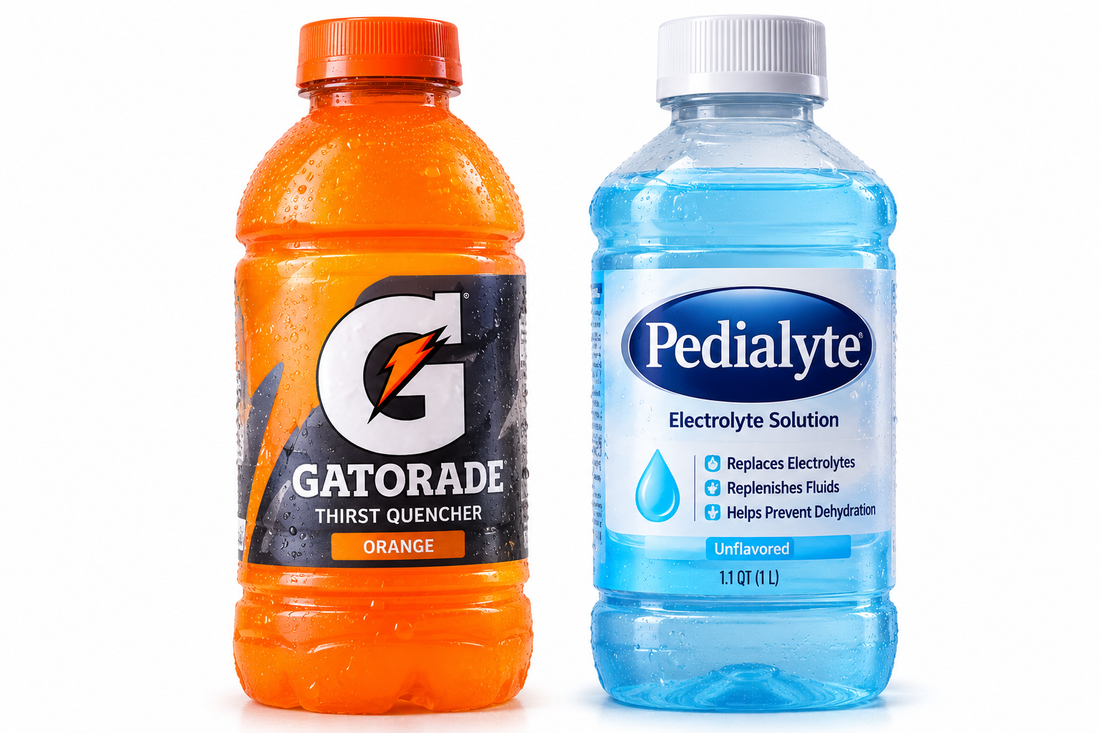
You open the fridge after a long day. There's a bottle of Pedialyte and a bottle of Gatorade.
They look alike and both promise to hydrate you.
Yet one was designed for a child with a stomach bug, while the other was designed for a football player in the middle of a game.
We compared what's in each bottle and the situation each one is made for. This is the Pedialyte vs. Gatorade comparison, without the jargon.
Pedialyte vs. Gatorade: what you need to know
Both are rehydration drinks. They provide water, sugar, and electrolytes.
They differ in their dosage and intended use.
Key takeaways
- Pedialyte has less sugar, more sodium, and more potassium. It is designed for illness (vomiting, diarrhea).
- Gatorade has more sugar and calories. It is designed for physical activity.
- Neither was designed for a long outing with a short list of ingredients.
What each drink contains
The values come from Healthline, for a 12 oz (360 mL) serving. We converted the published daily value percentages for American products into milligrams.
Formulas sold in Canada may differ.
| Criterion | Pedialyte Classic (360 mL) | Gatorade Thirst Quencher (360 mL) | Maple MC2 (1 packet in 500 mL) |
|---|---|---|---|
| Calories | 35 | 80 | 110 |
| Carbohydrates | 9 g | 22 g | 28 g |
| Sugar | 9 g | 21 g | 14 g |
| Sodium | ~370 mg | ~160 mg | 273 mg |
| Potassium | ~280 mg | ~45 mg | 94 mg |
| Sugar source | Dextrose | Sugar and dextrose | Maple syrup |
| Designed for | Illness, dehydration | Physical activity | Physical activity, with few ingredients |
The servings are not identical. The first two columns are for 360 mL, the last for one 30 g packet dissolved in 500 mL.
How an oral rehydration solution works
In the intestine, sodium and glucose travel together. When both are present in the right proportions, water follows and passes more quickly into the bloodstream.
This is the principle of an oral rehydration solution. It contains just enough sugar to help absorb sodium without including too much.
Too much sugar has the opposite effect. It draws water into the intestine and can worsen diarrhea.
This is why very sugary drinks are less suitable for a stomach bug. They are not designed for this use.
Sodium and potassium: why they matter
Sodium and potassium help your body maintain the right fluid balance. They also help your muscles and nerves function properly.
When you lose a lot of fluid, you lose both. This is why a rehydration drink contains more than water, and why Pedialyte's potassium stands out in the table.
Gatorade contains much less per 12 oz. For a short workout, this is not a problem, but with a stomach bug, the difference is noticeable.
Pedialyte, a drink designed for illness

Pedialyte is an oral rehydration solution. Its recipe balances sugar and sodium to help the intestine absorb water.
Pedialyte Canada offers it for both children and adults who lose fluids through vomiting or diarrhea. The AdvancedCare Plus range has 33% more electrolytes than the standard version, according to the brand.
For sports, Pedialyte provides few calories and 9 g of carbohydrates per 12 oz.
This is an advantage when your stomach is sensitive. After an hour of running, your body needs more fuel.
Pedialyte vs. Gatorade for adults with a stomach bug
The question comes up often, and a study has answered it.
A 2006 randomized trial followed 75 adults hospitalized with a viral stomach bug. Gatorade corrected dehydration as well as Pedialyte, but potassium levels remained low in the Gatorade group.
Healthline adds that Pedialyte is often still preferred in cases of diarrhea. Its lower carbohydrate content is less likely to worsen symptoms.
If you have been sick for more than a day, or if it is a child, call a healthcare professional. No store-bought drink can replace medical advice.
What else to do besides drink when you have a stomach bug

The drink is not everything. Rest and drink in small, frequent sips rather than a large glass at a time.
When vomiting stops, resume eating simple foods like rice, toast, or crackers. Gradually reintroduce the rest of your diet.
See a healthcare professional quickly if you have a fever or blood in your stool. Do so also if you cannot keep any liquids down or if symptoms last more than a day.
In Quebec, you can call Info-Santé at 811 to find out what to do.
Drinking more easily when your stomach is sensitive
When you feel nauseous, drinking is difficult. Some people tolerate a very cold drink better, sipped slowly.
Others prefer to suck on it in the form of ice cubes. The important thing is to maintain a regular intake of fluid, even in small amounts.
Gatorade, a high-sugar exercise drink
Gatorade was created for athletes. Its carbohydrates provide quick energy and help preserve muscle glycogen stores.
For 12 oz, it has 80 calories and 21 g of sugar, according to Healthline.
For a long workout, its weakness is sodium. It contains about 160 mg per 12 oz, while you lose it by sweating.
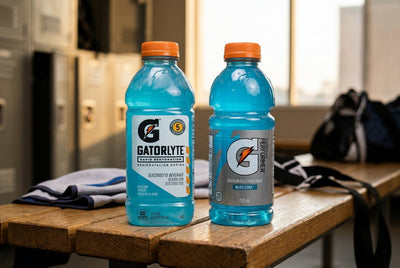
The brand also sells Gatorlyte, a version richer in electrolytes. Its formula differs from Thirst Quencher.

Are you hesitating between the two major sports drink brands? Read our Gatorade vs. Powerade comparison, or our article on a Gatorade alternative.
Signs of dehydration to watch for
The first sign is thirst, but it often comes after dehydration has already begun. Other signs help you react sooner.
- Dark or infrequent urine
- Dry mouth and chapped lips
- Headaches or dizziness
- Unusual fatigue or cramps
In a child or elderly person, these signs can develop quickly. In this case, it is better to seek advice without delay.
Urine color is a simple indicator for a healthy adult. The paler it is, the better hydrated you are.
How to read the label on these drinks

To compare two drinks, first look at the serving size. The figures for Pedialyte and Gatorade here are for 12 oz, or 360 mL.
Next, compare the sugar and sodium. A product with less sugar and more sodium is designed for illness, and vice versa for exercise.
Finally, look at the potassium and added ingredients. The two products differ most on these lines.
When water alone is enough
In most cases, water is the best drink. For a normal day or a short workout, neither Pedialyte nor Gatorade is necessary.
These drinks meet specific needs. Illness with fluid loss for one, a long and intense workout for the other.
If your urine is pale and you are not thirsty, your hydration is probably adequate. Eat to your fill and drink regularly throughout the day.
Pedialyte vs. Gatorade: which to choose according to your situation
- You have a stomach bug or are vomiting. Pedialyte is often better tolerated, with less sugar. Talk to a healthcare professional if it persists.
- You are doing a workout of less than 45 minutes. Water is often enough.
- You are going out for more than an hour. You need sodium and carbohydrates. Gatorade provides carbohydrates but little sodium, Pedialyte the opposite.
- You drank too much last night. No study shows that either drink cures a hangover. Drink water and eat something salty.
Sports nutrition guidelines recommend 30 to 60 g of carbohydrates per hour for intense exercise lasting more than an hour.
Pedialyte provides 9 g per 12 oz and Gatorade 22 g, but with little sodium.
To understand why sodium and carbohydrates work together, read our article on the SGLT1 mechanism.
After exercise, what to drink to recover

After a long or hot workout, your goal is to replace the lost water and salt. Guidelines often mention about 1.5 times the weight lost in fluid, over several hours.
If you have lost one kilogram, aim for about one and a half liters. Drink it gradually, not in ten minutes.
A meal containing salt, carbohydrates, and protein also helps with recovery. The drink accompanies the meal; it does not replace it.
Pedialyte may be suitable after a short workout when your stomach is sensitive. After a long outing, you will miss out on carbohydrates.
In hot weather and while traveling
Heat increases your losses of water and salt, even without exercise. On a sunny vacation, you can become dehydrated without realizing it.
Drinking water regularly remains the foundation. An electrolyte packet in your water bottle helps compensate for losses when you sweat a lot.
Avoid alcohol in the direct sun, as it makes you urinate more. Always plan to drink something before you get thirsty.
In case of heatstroke, with confusion, nausea, or hot and dry skin, call emergency services.
What to keep at home
A rehydration drink is rarely purchased at the right time. A small supply saves you from going out when you are sick.
Keep an oral rehydration solution for stomach bugs, especially if you have children. For sports, keep packets you have already tested.
Check the expiration dates once a year. An expired drink is not worth the risk.
Pedialyte vs. Gatorade according to your sport
- Running. For less than an hour, water is enough. Beyond that, you need sodium and carbohydrates, so neither alone.
- Cycling. Long outings require an energy intake. Gatorade provides it, but little sodium.
- Team sports. Gatorade on the sidelines does the job for a game. Pedialyte is suitable if your stomach is sensitive.
- Gym. A one-hour workout goes well with water. A little sodium helps if you sweat a lot.
In all cases, test what you choose during training. Your stomach and taste make the difference more than the label.
The third option for exercise, maple syrup

For sports, a third option exists. A single product provides both sodium and carbohydrates at the same time.
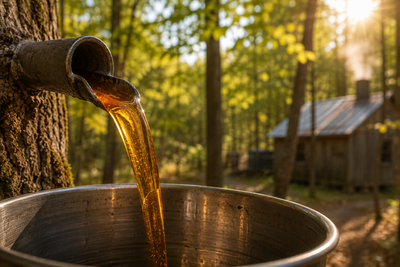
Maple MC2 is an electrolyte packet based on maple syrup, produced at the Ferme St-Ours in Montérégie. The ingredient list fits on four lines.
Per 30 g packet:
- 110 kcal
- 28 g of carbohydrates, which come from maple syrup
- 273 mg of sodium
- 94 mg of potassium
- 47 mg of calcium
- 15 mg of magnesium
- No artificial sweeteners, no coloring
One packet dissolves in 500 to 750 mL of water. Three flavors exist: Maple, Maple-Blueberry, and Maple-Peach.
MC2 is not a medical product and does not replace Pedialyte when you are sick. It is for outings where you sweat and need energy.
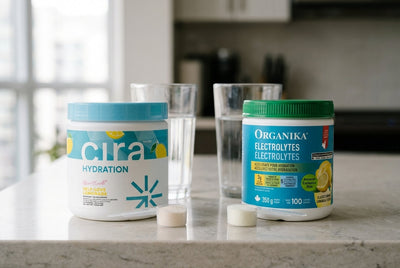
To compare other options, consult our ranking of natural electrolyte drinks in Canada. We have also compared coconut water and sports drinks.
Try the three flavors
Maple, Maple-Blueberry, Maple-Peach. 12 packets to find your favorite.
Discovery Box | $29.99Common mistakes with Pedialyte and Gatorade
- Diluting Pedialyte. Adding water changes the balance between sugar and sodium, unless the packaging specifies it.
- Taking Gatorade as a medical solution. It was designed for exercise, not for illness.
- Adding sugar at home. Poorly balanced homemade recipes can worsen the situation.
- Drinking everything at once. Small sips pass better when the stomach is sensitive.
- Waiting too long. If symptoms persist, medical advice is better than another drink trial.
These mistakes are easy to avoid when you know what each drink is for. The rest depends on your situation.
Frequently asked questions
In summary
Pedialyte has less sugar and more sodium. It replaces what you lose when you are sick.
Gatorade has more sugar and calories to support a workout, but it is low in salt. For a long ride, you need a drink that provides both, with a short list of ingredients.
Find our active lifestyle electrolyte drink collection.
Try the Maple, Maple-Blueberry, or Maple-Peach flavor, or discover all three with the Discovery Box.
To learn more about maple in sports, read maple syrup and sports nutrition, what science says.