“Natural Electrolytes”
These words have become a marketing buzzword plastered on every label.
Sodium, potassium, magnesium added in powder form, often drowned in a long list of synthetic ingredients.
But your body isn't looking for isolated minerals.
It's looking for sodium and glucose, together, in the same sip. Few products explain why.
Here's what science really says about natural electrolytes and their benefits in sports, with sources to back it up.
What exactly are natural electrolytes (and why your body loses so much of them during exercise)?

An electrolyte is an electrically charged mineral that allows your muscles to contract and your nerves to transmit signals. The three main ones for an athlete are sodium, potassium, and calcium.
You lose them primarily through sweat. And the more intense the effort, the more sodium loss increases, almost doubling compared to light exercise.
Specifically, natural electrolytes serve to:
- Maintain fluid balance inside and outside your cells
- Allow muscle contraction
- Transmit nerve impulses
Without them, your body slows down. Period.
The mechanism nobody explains: why carbohydrates and electrolytes go together

Your intestine absorbs sodium and glucose through the same transporter, called SGLT1. Without glucose, some sodium remains poorly absorbed. Without sodium, glucose enters more slowly.
That's why an effective rehydration solution is never just salt water, nor just sugar water. You need both, in the same glass.
An important nuance: the direct link between electrolyte deficiency and muscle cramps remains debated in scientific literature. Some studies confirm it, others do not.
To remember
The opposite risk also exists. A study published in the New England Journal of Medicine measured hyponatremia (too little sodium in the blood) in 13% of Boston Marathon runners, caused mainly by over-hydration with plain water during the race.
Maple: the only source that combines carbohydrates and electrolytes in a single ingredient
Maple syrup is one of the few raw ingredients that provides both rapidly absorbed carbohydrates and electrolytes, in a single food. No laboratory processing.
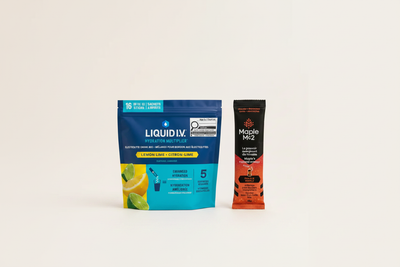
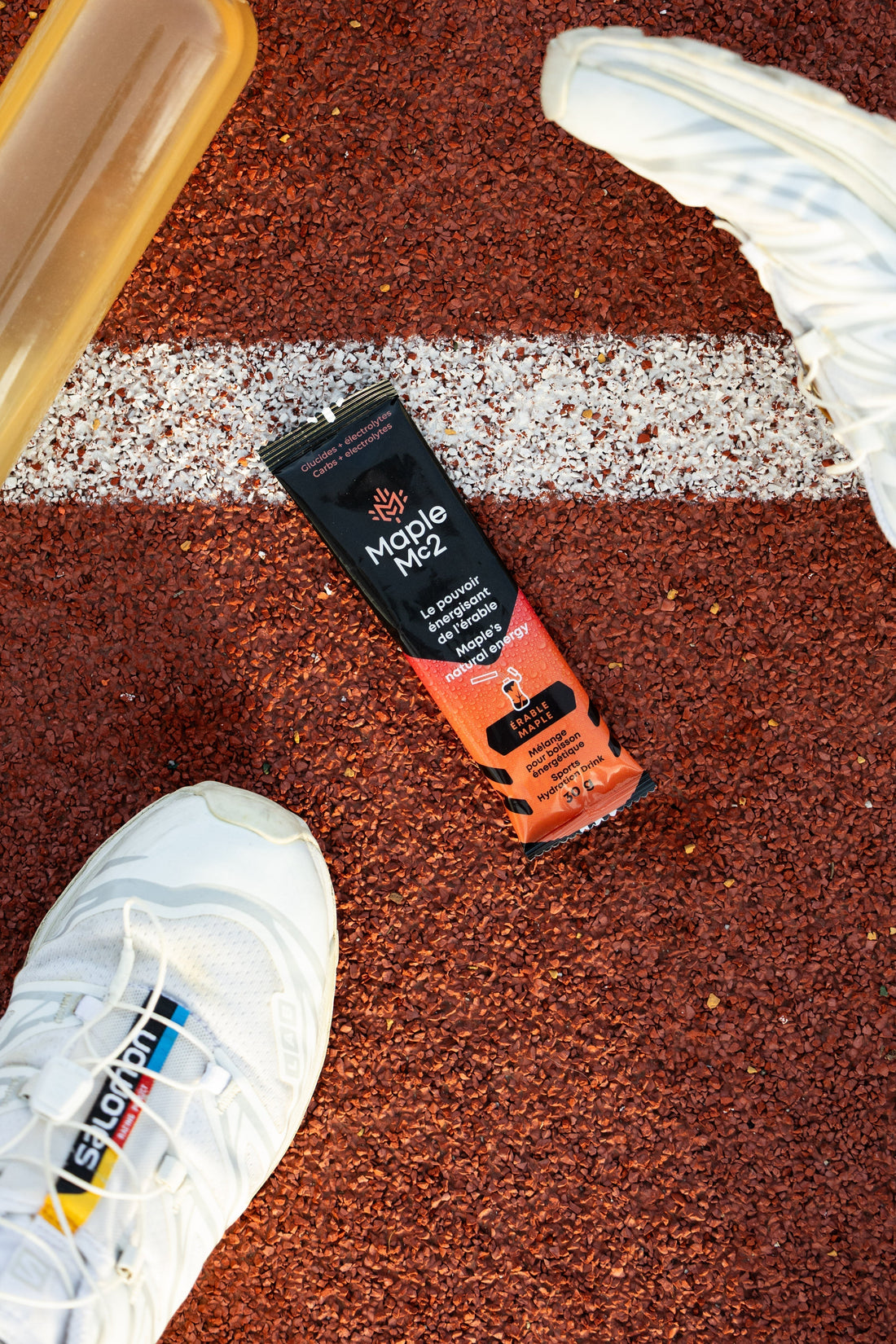
Each Maple MC2 sachet contains:
- 28g of carbohydrates
- 273mg of sodium
- 94mg of potassium
- 47mg of calcium
- 414mg of total electrolytes
- 110 kcal
These are measured values, not estimates. And these are the same natural electrolytes that accompany carbohydrates in a single sip, exactly the duo your intestine absorbs best.
Try all three flavors
Maple, Maple-Blueberry, Maple-Peach. 12 sachets to find your favorite.
Discovery Box | $29.99Natural electrolytes vs. industrial sports drinks: what really changes

Coconut water is another natural source of electrolytes, more effective than water alone for moderate rehydration. But it remains low in fast-acting carbohydrates, compared to maple.
An industrial drink, on the other hand, almost always adds its electrolytes separately, in synthetic powder, to a base of refined sugar or sweetener.
| Criterion | Maple (Maple MC2) | Generic industrial drink |
|---|---|---|
| Origin of electrolytes | Naturally present in maple syrup | Added separately in synthetic powder |
| Carbohydrates | 28g, organic maple syrup | Refined sugar or artificial sweetener |
| Sodium | 273mg per sachet | Varies by brand |
| Additives | None | Frequent flavorings, colorings, preservatives |
| Number of ingredients for carbohydrates + electrolytes | One (maple syrup) | Several, added in a lab |
| Price | $2.79 / sachet | Varies by brand |
How to use natural electrolytes depending on the timing of your effort

Before exercise
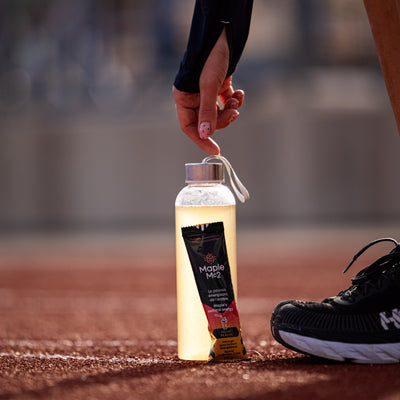
One sachet in 500 ml of water, two hours before departure.
The 28g of carbohydrates give you an energy reserve without overloading your stomach.
During exercise: real-time hydration and natural electrolytes
Beyond 60 minutes, one sachet every 45 to 60 minutes.
The carbohydrate and natural electrolyte duo replaces what you actually lose at the same rate.
After exercise
Within 30 to 60 minutes after finishing.
Natural electrolytes replace what you've lost. Fewer potential cramps. Faster recovery.
Frequently Asked Questions
In summary
On one side: isolated minerals, added as synthetic powder, unrelated to the carbohydrates that should be consumed at the same time.
On the other: natural maple electrolytes, combined with carbohydrates in a single ingredient, exactly as your body absorbs them best.
Discover our flavors maple, maple-blueberry and maple-peach, or try them all with the discovery box.