Short answer
Yes, maple syrup can work as a natural, caffeine-free energy drink. It provides carbohydrates, the fuel your muscles use, and no stimulant.
One Maple MC2 sachet contains 28 g of carbohydrates and 0 mg of caffeine.
You open the fridge at the corner store. A can of Red Bull, one of Monster, one of Guru.
You turn one over and read the ingredients. Caffeine, taurine, glucuronolactone, coloring, sweeteners or refined sugar depending on the version.
You put it back. That is not what you are looking for.
A question is going around locker rooms across Canada. Can maple syrup, with no caffeine and no additives, deliver energy?
Energy and a caffeine buzz are not the same thing. We look at why a natural maple energy drink does a different job than a can.
What is a maple syrup energy drink?
For most people, "energy drink" means caffeine, taurine and a buzz that hits fast.
Energy, in the physiological sense, comes from carbohydrates. Your body converts them into glucose, then into muscle glycogen, the reserve your muscles use during exercise.
A maple syrup energy drink works on that mechanism, with carbohydrates and no stimulant. Both categories share the same name and do not do the same job.
- Caffeinated energy drink (Red Bull, Monster, Guru): caffeine stimulates the nervous system and masks fatigue
- Carbohydrate energy drink (maple syrup, Maple MC2): it delivers fuel to your muscles, with no stimulant
Why caffeine does not fix a lack of energy during exercise
Caffeine has its place. A coffee before a morning workout works for a lot of people.
It blocks adenosine receptors in your brain, the molecule that signals fatigue. Your fatigue does not go away, you just stop feeling it for a while.
In Canada, an energy drink can contain a maximum of 180 mg of caffeine per serving. Adults should not consume more than 400 mg per day from all sources.
Health Canada also notes that too much caffeine can cause insomnia, irritability, headaches and nervousness.
For sustained effort, your muscles need available glucose. Blocking their fatigue signal does not feed them.
Key takeaways
- Caffeinated energy drink: up to 180 mg of caffeine per serving in Canada.
- Maple MC2: 0 mg of caffeine, 28 g of carbohydrates per sachet.
- Caffeine masks fatigue. Carbohydrates fuel the effort.
Muscle glycogen, the fuel for exercise
When you eat carbohydrates, your body converts them into glucose. Part of it circulates in your blood for immediate energy, another part is stored in your muscles and liver as glycogen.
During exercise, these reserves fuel muscle contraction first. When they run out, you hit the wall that distance runners and cyclists know well.
Consuming carbohydrates before or during exercise helps keep those reserves longer, without going through caffeine.
- Before exercise: carbohydrates fill up glycogen reserves
- During prolonged exercise: they slow the depletion of those reserves
- After exercise: they help rebuild glycogen for recovery
For intense effort longer than an hour, the American College of Sports Medicine recommends 30 to 60 g of carbohydrates per hour.
Why maple syrup works as an energy source
The sugar in maple syrup is mainly sucrose, a simple carbohydrate your body absorbs quickly. It is the same type of sugar found in most sports drinks.
- A glycemic index often cited at around 54, compared to 65 for table sugar
- Vitamins and minerals naturally present in the syrup
- No synthetic additives, so no caffeine, no taurine and no coloring
A 2020 study in the Journal of the International Society of Sports Nutrition compared four drinks during 120 minutes of cycling. They contained maple sap or maple syrup, glucose or a commercial sports drink, plus a placebo.
Participants liked the maple syrup drink, and the authors consider it comparable to more common carbohydrate sources. The study looks at taste and perceived effort and shows no performance gain.
One Maple MC2 sachet contains 28 g of carbohydrates, close to the 30 to 60 g per hour range.

What about digestion?
Caffeinated energy drinks are often blamed for digestive discomfort. Bloating, acidity, sometimes nausea mid-effort.
Maple syrup is considered low in FODMAPs, which limits the risk of discomfort compared to drinks high in fermentable sugars.
Every stomach reacts differently, so test your sachet in training before using it in competition.
Try energy without caffeine
Maple, Maple-Blueberry, Maple-Peach. 12 sachets to find your favorite.
Discovery Box | $29.99Maple syrup or caffeinated energy drink, the comparison table

| Criterion | Caffeinated energy drink | Maple MC2 |
|---|---|---|
| Caffeine | Up to 180 mg per serving (maximum in Canada) | 0 mg |
| Carbohydrates | Varies by version | 28 g (including 14 g of sugars) |
| Energy source | Nervous stimulation, plus sugar depending on the version | Carbohydrates from maple syrup |
| Sodium | Varies by brand | 273 mg |
| Ingredients | Taurine, glucuronolactone, coloring, sweeteners depending on the brand | Maple syrup, salt, freeze-dried fruit, natural flavors |
| Possible effects | Insomnia, irritability, headaches, nervousness if too much caffeine | No caffeine, but 14 g of sugars per sachet |
| Origin | Varies by brand | Saint-Ours, Canada |
Check the label of the can you are comparing. Carbohydrate, sodium and ingredient values change from one brand and flavor to the next.
Where Maple MC2's energy comes from

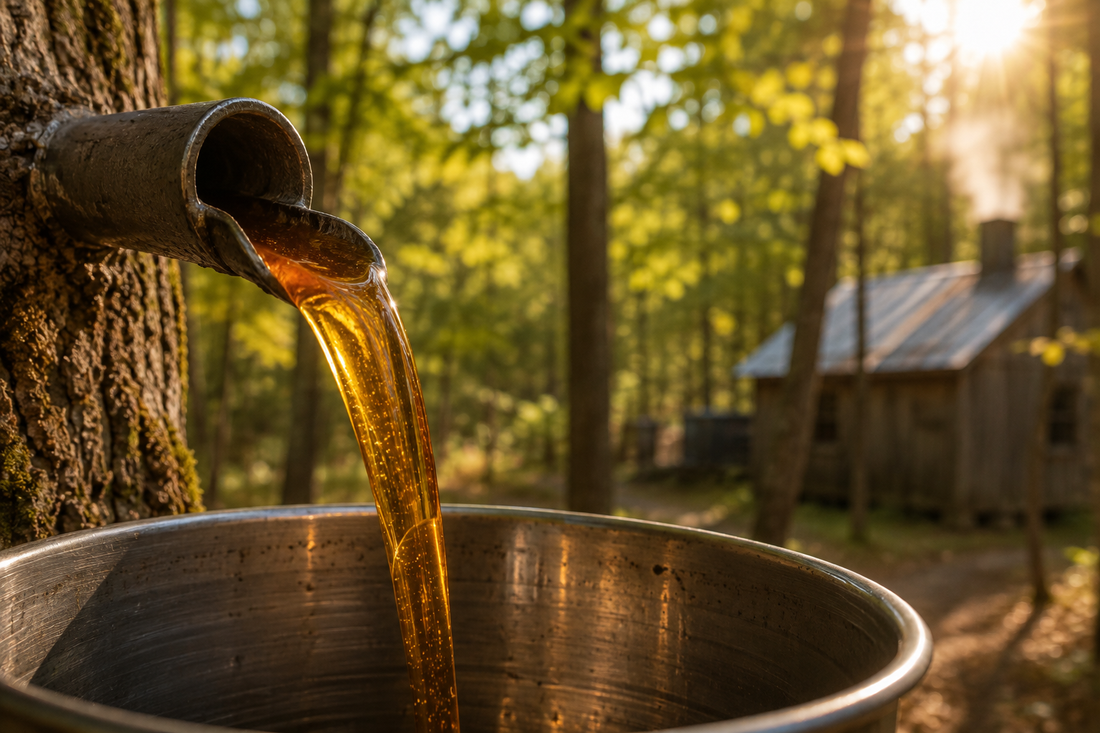
Maple syrup is the result of concentrating maple sap, harvested in spring from Canadian sugar bushes.
Maple MC2 is made at Ferme St-Ours, in Montérégie, a multi-generational family sugar bush and farm.
The maple syrup is certified organic. The finished drink is not, because the salt and natural flavors are not covered by the certification.
Each sachet provides 110 kcal, 28 g of carbohydrates, 273 mg of sodium, 94 mg of potassium and 47 mg of calcium. You know where the main ingredient comes from.
How to use maple syrup as an energy drink
One sachet dissolves in 500 to 750 mL of water in a few seconds. The right timing depends on your activity.
Before exercise, filling up reserves
One sachet 15 to 30 minutes before exercise helps you start with carbohydrates available. You avoid the nervous spike of caffeine.
During prolonged exercise, a natural energy drink
For a bike ride, a long run or a game lasting more than 60 minutes, plan one sachet per bottle. It helps slow glycogen depletion.
After exercise, speeding up recovery
One sachet within 30 to 60 minutes after training helps rebuild glycogen. That is useful if another workout follows within 24 hours.
To go further, read our article on maple syrup in sports nutrition. To compare options in Canada, check the comparison of the best natural electrolyte drinks.
Wondering about a classic sports drink? Our article on natural sports drinks made with maple vs. artificial sugars gives you the comparison.
Frequently asked questions
In summary
A caffeinated can stimulates your nervous system and masks fatigue, with up to 180 mg of caffeine per serving.
A natural energy drink like Maple MC2 gives your muscles carbohydrates. It contains no caffeine and no synthetic additives, and it is made in Canada.
Find our natural alternative to energy drinks collection.
Try the Maple, Maple-Blueberry or Maple-Peach flavor, or discover all three with the Discovery Box.