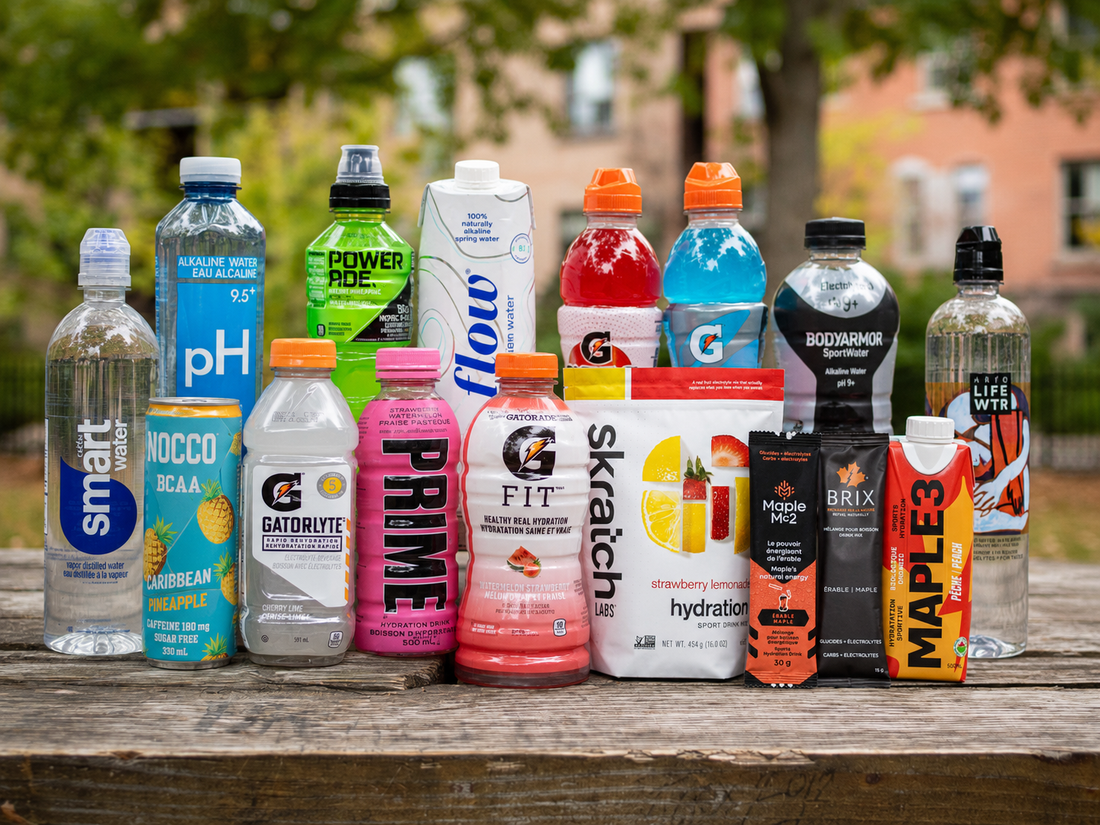
Most "best electrolyte drink" rankings compare lab-formulated powders. Synthetic salts, artificial flavors, sweeteners.
We did things differently.
Our Methodology
Each product was evaluated based on five specific criteria, equally weighted:
- Actual naturalness of ingredients. A single unprocessed ingredient receives the maximum score. A short formula (2-3 ingredients) receives an intermediate score. A long formula with synthetic salts and flavors receives a low score.
- Transparency of nutritional data. Are the exact values of sodium, potassium, calcium, and magnesium clearly published by the brand?
- Price per serving. The actual cost paid by the Canadian consumer, in Canadian dollars, for a standard serving.
- Availability in Canada. Is the product easily accessible without expensive importation?
- Digestive tolerance. Does the product contain ingredients known to cause gastrointestinal discomfort during exercise (high FODMAPs, synthetic sweeteners, acidifiers)?
This ranking prioritizes the naturalness and simplicity of ingredients. If your main criterion is the highest possible sodium concentration or the lowest price, consult our comparison table below to identify the product that suits you.
Here is the best natural electrolyte drink in Canada according to these criteria, and six other options to consider.
#1 Maple MC2 (Maple)

Only one ingredient: organic maple syrup. No added lab salts, no synthetic flavors, no sweeteners.
Detailed Nutritional Profile
Maple MC2 — Full Details
$2.79/sachet | $29.99/box of 12 | $2.50/serving with subscription
| Nutrient | Per sachet (40 g) | % Daily Value |
|---|---|---|
| Calories | 110 kcal | — |
| Carbohydrates (natural) | 28 g | 10 % |
| Sodium | 273 mg | 12 % |
| Potassium | 94 mg | 2 % |
| Calcium | 47 mg | 4 % |
| Magnesium | 11 mg | 3 % |
| Manganese | 3.3 mg | 143 % |
| Zinc | 2.8 mg | 25 % |
Ingredient: Organic maple syrup (100%). That's all.
Where do electrolytes come from?
Maple syrup naturally contains sodium, potassium, calcium, and magnesium. These minerals come from the sap of the sugar maple tree (Acer saccharum), absorbed by the tree's roots from the soil. No salts are added after harvesting.
A review published in Nutrients (2022) documented that maple syrup contains over 67 bioactive compounds, including polyphenols with antioxidant properties that no lab formula can replicate.
Taste, Texture, and Dissolution
The sachet dissolves in 10-15 seconds in 500 ml of cold or room-temperature water. No clumps, no residue at the bottom of the bottle.
The taste is that of diluted maple syrup: sweet without being cloying, with a characteristic woody note. The Blueberry and Peach flavors add a fruity note without artificial flavors (real fruit concentrates).
Unlike salt-based formulas, there is no metallic or salty aftertaste.
Digestive Tolerance and Low FODMAP
Maple syrup is classified as Low FODMAP by Monash University, the global reference for digestive tolerance. In practice, this means the sachet does not contain excess free fructose, lactose, polyols, or fructans, the four carbohydrate families most commonly causing bloating, cramps, and diarrhea during exercise.
This is a measurable advantage for athletes who suffer from gastrointestinal issues during training or competition, a problem affecting between 30 and 50% of endurance runners according to studies.
Manufacturing
Manufactured in Saint-Ours, Montérégie (Quebec). The syrup comes from certified organic maple groves. The packaging is designed to withstand transport conditions in a gym bag or jacket pocket.
Three Flavors Available
- Maple (the original, pure taste)
- Maple-Blueberry (fruity note, popular in summer)
- Maple-Peach (milder, often preferred by beginners)
Usage Scenarios
- Running or cycling (less than 90 min): one sachet in 500 ml of water covers electrolyte and carbohydrate needs.
- Gym workout: one sachet diluted in 750 ml for a lighter taste.
- Daily hydration: one sachet in 1 L of water, especially in hot weather.
- After a hangover: sodium and carbohydrates accelerate rehydration.
Advantages and Limitations
- Single ingredient, 100% transparent nutritional data
- Well-tolerated during exercise (Low FODMAP), no sweeteners
- Contains polyphenols and manganese absent from salt formulas
- Made in Quebec, short supply chain
Points to consider: Sodium (273 mg) is more moderate than very salty formulas like LMNT (1,000 mg). For extreme sweating in high heat (more than 2 hours in direct sun), a more concentrated sodium product may be more suitable. The range of flavors (3) is more limited than established brands like Skratch Labs or Nuun. The product contains 110 kcal per sachet, which is not suitable for people seeking zero calories.
#2 Skratch Labs Sport Hydration Drink Mix
A "real food" formula: cane sugar and real fruit juice rather than synthetic flavors. Founded by Dr. Allen Lim, former physiotherapist for a Tour de France team.
Price: $23.95 US on the official website (approx. $33 CAD at current exchange rates). Some Canadian distributors sell the 20-serving size for around $45-60 CAD, depending on the retailer.
Per serving: 400 mg sodium, 40 mg potassium, 40 mg calcium, 40 mg magnesium, 80 kcal, 19 g carbohydrates. Price per serving: approx. $1.65-3.00 CAD depending on size and distributor.
Gluten-free, vegan, non-GMO.
- Real ingredients (fruit, not just flavors)
- High sodium (400 mg), useful for endurance
- Wide range of flavors (8+)
Points to consider: Contains added cane sugar and sodium citrate, thus a multi-ingredient formula rather than a single ingredient. American brand, price increases once imported to Canada depending on the distributor.

#3 BRIX Rechargé par la Nature
Another maple syrup-based option, made in Quebec. Maximum 3 ingredients: maple syrup, Himalayan salt, fresh fruit concentrate.
Price: starting from $3.25 per sachet, up to $41.95-42.25 for a larger size.
Per serving: 200 mg sodium, 49 g carbohydrates, approx. 190 kcal. Price per serving: approx. $3.25 CAD.
No artificial flavors or colors.
- Also maple-based, Quebec brand
- Very short formula (3 ingredients), no additives
Points to consider: The serving is more caloric (190 kcal vs 110 kcal for MC2) with 49 g of carbohydrates per sachet. Himalayan salt is an addition, so it's not a single ingredient. Sodium is slightly lower (200 mg vs 273 mg for MC2).

#4 LMNT
Very salty, zero-sugar sticks, popular among keto and paleo enthusiasts.
Price: approx. $32.99 CAD for the 12-sachet assortment (Amazon CA).
Per serving: 1,000 mg sodium, 200 mg potassium, 60 mg magnesium, 5 kcal, zero sugar. Price per serving: approx. $2.75 CAD.
- Zero sugar, zero calorie (or almost)
- Highly concentrated sodium (1,000 mg), the highest in the ranking
Points to consider: A salt formula (sodium chloride, potassium chloride, magnesium citrate) with natural flavors and stevia. 1,000 mg sodium per serving is not suitable for daily use for everyone, especially those on a reduced-sodium diet. American brand. Very salty taste that not everyone enjoys.

#5 WakeWater
A Canadian-made brand, zero sugar, sweetened with stevia.
Price: approx. $21.99 CAD, 10 sticks per box.
Per serving: 800 mg sodium. Potassium and magnesium values are not clearly published on the packaging. Zero sugar. Price per serving: approx. $2.20 CAD.
- Made in Canada
- Zero sugar, high sodium
Points to consider: Stevia sweetener, which can cause a bitter aftertaste in some people. Potassium is not publicly quantified, which reduces transparency.

#6 Nuun Sport
The most common effervescent tablet in Canada. Easy to find in pharmacies, sports stores, and online.
Price: approx. $12.99 CAD per tube of 10 tablets.
Per serving: 300 mg sodium, 150 mg potassium, 25 mg magnesium, 15 kcal, 1 g added sugar. Price per serving: approx. $1.30 CAD.
- Widely available in Canada (easiest to find)
- Convenient tablet format, no need to measure
- Lowest price per serving in the ranking
Points to consider: Contains dextrose, citric acid, natural flavors, and sodium bicarbonate. It's a laboratory formula, not a single ingredient. Some users report bloating caused by the effervescence. American brand.

#7 Organika Electrolytes
A Canadian brand (British Columbia) recognized in the natural health niche.
Price: approx. $23.98 CAD (Amazon CA) for the Extra Strength format.
Per serving (Extra Strength): 1,000 mg sodium, 186 mg potassium, 79 mg magnesium. Zero sugar. Price per serving: varies depending on format (approx. $1.50-2.00 CAD).
- Established Canadian brand, good reputation
- High sodium in the Extra Strength version
Points to consider: Salt formula (sodium chloride, potassium citrate, magnesium citrate) sweetened with stevia and citric acid. The range includes several variants with different dosages, which can be confusing.

Comparison Table
| Product | Price/serving | Sodium | Potassium | Main ingredient | Calories | Added Sugar | Made in Canada |
|---|---|---|---|---|---|---|---|
| Maple MC2 | $2.50-2.79 | 273 mg | 94 mg | Maple syrup (single ingredient) | 110 | No | Yes (Quebec) |
| Skratch Labs | $1.65-3.00 | 400 mg | 40 mg | Cane sugar + fruit juice | 80 | Yes | No |
| BRIX | ~$3.25 | 200 mg | N/A | Maple syrup + Himalayan salt | ~190 | No | Yes (Quebec) |
| LMNT | ~$2.75 | 1,000 mg | 200 mg | Salts + natural flavors | 5 | No | No |
| WakeWater | ~$2.20 | 800 mg | N/A | Salts + stevia | 0 | No | Yes |
| Nuun Sport | ~$1.30 | 300 mg | 150 mg | Salts + acids + flavors | 15 | 1 g | No |
| Organika | ~$1.50-2.00 | 1,000 mg | 186 mg | Salts + citric acid + stevia | 0 | No | Yes (B.C.) |
How Electrolytes Work (The Science)
Electrolytes are minerals that carry an electric charge when dissolved in water. The four main ones for hydration are sodium, potassium, calcium, and magnesium.
Why Sodium Is Most Important
Sodium is the main electrolyte lost in sweat. One liter of sweat contains an average of 900 mg of sodium, but only 200 mg of potassium and traces of calcium and magnesium. This is why sports drinks emphasize sodium.
But "more sodium" does not mean "better" for everyone. Health Canada recommends an adequate intake of 1,500 mg of sodium per day for adults, with a maximum of 2,300 mg. One LMNT sachet (1,000 mg) already represents 67% of this recommended intake. For an endurance athlete sweating 2 liters per hour in direct sun, it's justified. For a 45-minute yoga session, probably not.
The Role of Carbohydrates in Absorption
Sodium is better absorbed by the intestine when transported with glucose. This is the principle behind oral rehydration solutions (ORS) used by the World Health Organization for decades. Zero-sugar products like LMNT or WakeWater rely on osmosis rather than this co-transport, which also works but through a different mechanism.
Products that contain carbohydrates (Maple MC2, Skratch Labs, BRIX) combine both absorption mechanisms, which can be an advantage for hydration during prolonged efforts.
Digestive Tolerance During Exercise
Gastrointestinal problems during exercise are common: 30-50% of endurance runners report nausea, cramps, or diarrhea during races. Common causes include high FODMAPs (free fructose, polyols), artificial sweeteners, effervescence (CO2), and high citric acid concentrations.
Buyer's guide: how to choose your electrolyte drink
1. Determine your main need
Not all products in this ranking meet the same needs:
- Daily hydration or moderate effort (less than 60 min): a product with moderate sodium (200-400 mg) is sufficient. MC2, Skratch Labs, BRIX, or Nuun are suitable.
- Long-duration endurance (more than 90 min) or high heat: a more concentrated sodium (800-1,000 mg) compensates for significant losses. LMNT, WakeWater, or Organika Extra Strength are better suited.
- Keto diet or zero sugar: LMNT, WakeWater, or Organika.
- Digestive sensitivity: prioritize products without sweeteners, effervescence, and classified as Low FODMAP. MC2 is the only product in this ranking with the Low FODMAP classification.
2. Understand the label
Three things to check on any electrolyte drink:
- Milligrams of sodium per serving. This is the most important number. Below 200 mg, it's flavored water. Between 200 and 500 mg, it's suitable for moderate effort. Above 800 mg, it's designed for intense sweating.
- The ingredient list. The shorter it is, the better in terms of naturalness. A single ingredient (maple syrup) stands out from a formula of 8-12 ingredients including flavors and sweeteners.
- The type of sugar. "No added sugar" does not mean "no sweetener." Many "zero sugar" products contain stevia or sucralose, which are sweeteners.
3. Powder, tablet, or ready-to-drink liquid?
- Powder sachet (MC2, Skratch Labs, BRIX, LMNT, WakeWater, Organika): the most concentrated format. Lightweight to carry, you control the dilution. Disadvantage: you need a water bottle.
- Effervescent tablet (Nuun): convenient and fast. Disadvantage: effervescence can cause bloating in some people, and dosages are fixed.
- Ready-to-drink liquid (not included in this ranking): zero preparation. Disadvantage: more expensive per serving, heavy to carry, bulkier packaging.
4. Calculate the real cost per serving
The price displayed on the box doesn't tell the whole story. A tube of Nuun at $12.99 for 10 servings costs $1.30/serving. A box of LMNT at $32.99 for 12 sachets costs $2.75/serving. Always compare in dollars per serving, not price per box.
5. Beware of unverifiable claims
Terms like "superior hydration," "3x faster absorption," or "pharmaceutical-grade electrolytes" are marketing claims that are generally not supported by published clinical studies. Rely on numbers (mg of sodium, number of ingredients, price per serving) rather than slogans.
How to choose based on your activity
| Activity | Sodium requirement | Recommended options |
|---|---|---|
| Walking, yoga, office | Low (200-300 mg) | MC2, BRIX, Nuun |
| Running, cycling, weight training (less than 90 min) | Moderate (300-500 mg) | MC2, Skratch Labs |
| Long-duration endurance or high heat | High (800-1,000 mg) | LMNT, WakeWater, Organika |
| Keto diet or zero sugar | Variable | LMNT, WakeWater, Organika |
| Digestive sensitivity | Moderate | MC2 (Low FODMAP) |
| Tight budget | Variable | Nuun ($1.30/serving), Organika |

Frequently Asked Questions
In summary
Seven options, seven different profiles. There is no universal "best drink." The right choice depends on your activity, digestive tolerance, budget, and ingredient preferences.
If naturalness and simplicity of ingredients are your top criteria, Maple MC2 is the purest option on the market with a single ingredient. If you're looking for the most concentrated sodium, check out LMNT or Organika. If your budget is limited, Nuun Sport offers the best cost-per-serving value.
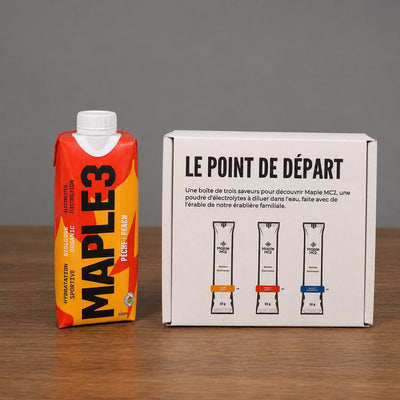
Discover our maple, maple-blueberry, and maple-peach flavors, or try them all with the discovery box.