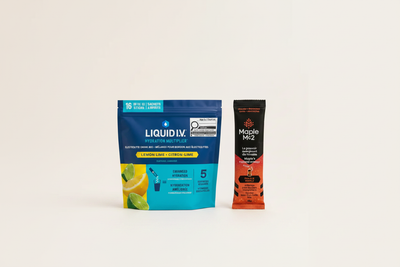
Open the sports nutrition tab of any online store.
- Nutripure
- Aroma-Zone
- Effinov Nutrition
- Nutri&Co
Four different brands, four lab formulas, the same generic explanation of electrolytes.
None of them show you what a real natural source looks like. Here are natural electrolytes and their benefits for sport, and why the source matters as much as the amount.
What natural electrolytes actually are
Electrolytes are electrically charged minerals: sodium, potassium, calcium, magnesium. Your body uses them for almost everything, from muscle contraction to nerve signal transmission.
You lose them mainly through sweat. The longer or more intense the effort, the greater the loss.
Why your body needs them during exercise
- Maintain hydration
- Support muscle contraction
- Regulate heart rate
- Delay fatigue and cramps
Without enough electrolytes, water alone isn't enough to keep you hydrated. Cramps and energy dips show up faster, especially in the final stretch of a prolonged effort.
Natural vs synthetic electrolytes: what's the difference
A synthetic electrolyte is made in a lab: an isolated salt, added to a formula. A natural electrolyte is already present in a whole food, without heavy chemical processing.
Both do the same job in your body. The difference is what comes with them: additives, artificial sweeteners, colouring, or nothing at all.
Why most sports products on the market aren't natural
It's easier to standardize in a lab: same dose, same taste, every time. Synthetic sodium is also cheaper to produce at scale than a whole food source.
Key takeaway
One Maple MC2 sachet contains 414 mg of natural electrolytes (sodium, potassium, calcium, magnesium), all from a single ingredient: maple syrup.
The benefits of natural electrolytes for sport: what the research says
Studies on sports hydration are clear: electrolytes help maintain fluid balance, support muscle contraction, and delay the onset of fatigue during prolonged efforts.
Maple syrup provides its electrolytes naturally, with the carbohydrates in the same ingredient. Sodium 273 mg, potassium 94 mg, calcium 47 mg, magnesium 15 mg per sachet, with a lower glycemic index than refined sugar.
When and how much to take
Under 60 minutes of light effort, water is usually enough. Beyond that, or in hot weather, electrolytes become useful to maintain your energy level.
One sachet before exercise, another during if it goes past an hour, and a last one after for recovery is a good starting point to adjust based on your own sweat rate.
Discover our three flavours
Maple, Maple-Blueberry, Maple-Peach. 12 sachets to find your favourite.
Discovery Box | $29.99Comparison table: natural electrolytes vs synthetic tablets and powders
| Criteria | Maple (Maple MC2) | Synthetic tablets/powders |
|---|---|---|
| Origin | Family sugar bush, Montérégie | Synthesized in a lab |
| Carbs included | Yes, in the same ingredient (28 g) | Separate, often absent from tablets |
| Additives | None | Often artificial sweeteners, flavouring |
| Taste | Natural maple | Variable, often artificial |
| Certification | Organic, vegan, gluten-free | Rarely organic |
| Format | Sachet to dilute | Tablet or powder |
Is it okay to take them every day
For a healthy person with normally functioning kidneys, taking electrolytes daily is generally not risky, especially if you train regularly or sweat a lot.
What matters is the source. A natural source like maple syrup avoids the buildup of additives that comes with some synthetic products taken repeatedly.
Frequently Asked Questions
In summary
On one side: tablets and powders assembled in a lab, with a generic explanation of electrolytes that never shows where they actually come from.
On the other: a single ingredient, maple syrup, that provides carbohydrates and natural electrolytes at the same time.
Next time you're trying to understand the benefits of natural electrolytes for sport, start by looking at what's actually in your drink.