You prepare your bottle before a workout.
1L of water, a pinch of salt, a little maple syrup if you've followed a nutritionist's advice.
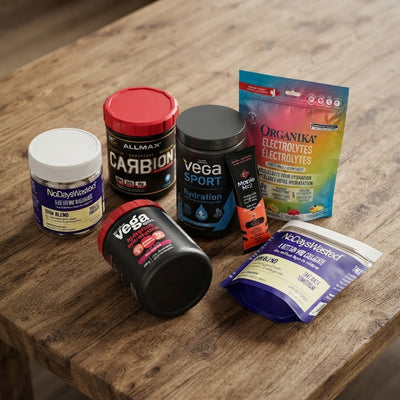
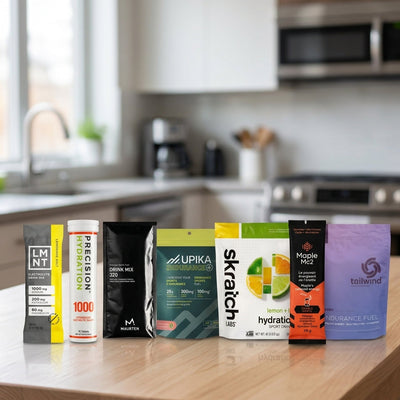
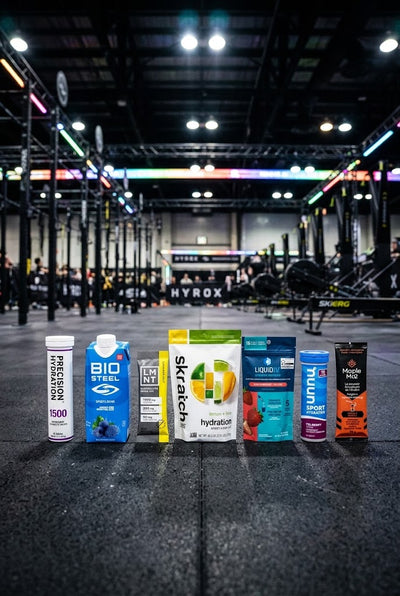
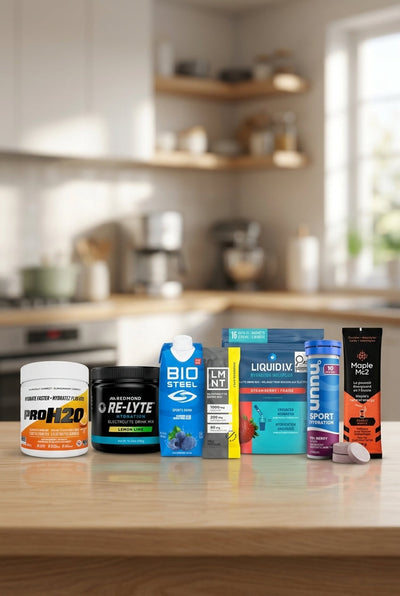
Or you open the fridge and grab a store-bought sports drink, ready in two seconds.
Two options are available to you when it comes to hydrating during exercise:
- The homemade recipe, economical, but measured by eye
- The commercial drink, precise, but full of additives
It's no coincidence that ÉquipeNutrition and Protégez-Vous already recommend maple syrup in their homemade sports drink recipes.
This is the starting point of a real debate between homemade vs. store-bought sports drinks, and the answer is more nuanced than a choice between two camps. It mainly depends on what you are willing to measure, transport, and accept on your ingredient list.
How a sports drink works, homemade or commercial
A sports drink is based on three simple elements.
- Water, for basic hydration
- Carbohydrates, to provide energy to the muscles
- Electrolytes, especially sodium and potassium, to replace what you lose in sweat
The ratio between these three elements determines how quickly your body absorbs the liquid. Specialists call this osmolality.
ÉquipeNutrition places the ideal sports drink around 410 mOsm/L, a technical benchmark that explains why a poorly dosed homemade recipe can either hydrate too slowly or cause digestive discomfort.
 Too diluted, the drink provides almost nothing but water. Too concentrated, it slows down absorption and can even draw water to the stomach rather than to the muscles.
This is why a homemade recipe that varies from one time to another gives inconsistent results. One day it goes well, the next day the same recipe seems too sweet or not salty enough.
Sweat rate also changes from person to person, and from day to day depending on heat, humidity, and intensity. A fixed formula never adjusts to this, whether it comes from a homemade recipe or a store-bought bottle.
Whether you prepare your drink yourself or buy it pre-made, it's this balance between water, carbohydrates, and electrolytes that makes the difference between a drink that works and a drink that just tastes sweet.
The advantages of homemade
Making your own sports drink has real advantages.
- The cost per serving is significantly lower than a store-bought drink
- You control exactly what goes into your bottle
- You adjust the taste and concentration to your preferences
ÉquipeNutrition and Protégez-Vous both document a similar basic recipe: water, a natural sugar source like maple syrup, and a pinch of salt.
It's simple. It's also proof that maple is not a marginal ingredient in a homemade sports drink recipe. Two Quebec nutritional references already recommend it.
There's also a less talked-about advantage: fewer single-use packages. A reused syrup jar replaces dozens of disposable bottles over a season.
The homemade maple sports drink recipe, precisely measured to the gram
Here's the recipe beyond a simple "pinch of salt," with precise quantities to eliminate measuring by eye.
Ingredients for 1 liter: water, maple syrup, table salt, a splash of lemon juice (optional, for taste).
Two versions depending on the duration of your effort:
- Hypotonic version (short effort, or high heat where hydration is paramount): 45 ml of maple syrup and 1.3 g of table salt (about a quarter teaspoon), topped up to 1 liter of water.
- Isotonic version (effort of more than one hour): 80 ml of maple syrup and 1.8 g of table salt (about a third of a teaspoon), topped up to 1 liter of water.
The calculation behind these numbers, not just the result: the American College of Sports Medicine recommends between 0.5 and 0.7 g of sodium per liter for effort. One gram of table salt provides approximately 390 mg of sodium, which gives between 1.3 and 1.8 g of salt per liter to reach this range. For carbohydrates, the target is 4 to 8% of the drink: maple syrup being composed of about 67% sugars, this gives between 45 and 90 ml of syrup per liter depending on the desired concentration.
| Per 500 ml serving | Your homemade recipe (isotonic version) | One MC2 sachet |
|---|---|---|
| Sodium | ~350 mg | 273 mg |
| Carbohydrates | ~35 g | 28 g |
| Potassium | Not provided by this recipe | 94 mg |
| Calcium | Not provided by this recipe | 47 mg |
| Preparation time | ~5 minutes, with scale or measuring spoons | 10-15 seconds |
| Cost per serving | ~$0.75 | $2.50 to $2.79 |
The recipe works, honestly. What the pre-dosed sachet addresses is not the quality of the ingredient, but the dosage and transport: no need to take out a scale, and a potassium and calcium intake that this basic recipe does not provide.
The real limitations of homemade
Homemade also has its blind spots, and they are rarely mentioned.
- "A pinch of salt" is not a measurement. The dosage changes with each preparation
- Nothing guarantees that your recipe actually achieves the desired water, carbohydrate, and electrolyte ratio
- Transporting a jar of syrup and measuring by the liter before each outing takes time
- On an early morning outing, it's often the first thing skipped
The problem is not the ingredient. Maple syrup works well as a carbohydrate source.
The problem is precision. And this imprecision has a concrete effect on training: if your drink changes concentration with each outing, you can never truly know if discomfort comes from effort, heat, or the dosage in your bottle.
For occasional training, it's not a big deal. For someone who trains several times a week, this extra variable complicates tracking what really works for their body.
What research says about maple syrup and physical exertion

Maple syrup is not just a "natural" default choice. It has an interesting profile for exertion.
A study published on PMC compares the glycemic index of different carbohydrate sources used in sports nutrition, including maple and maltodextrin, the most common sweetening ingredient in industrial sports drinks. See the study.
Research conducted at Laval University also looked at the metabolic effects of maple syrup consumed in an exercise context. See the research.
This work does not make maple a miracle ingredient. It mainly confirms that there is no compromise to be made between a carbohydrate that works for exertion and a recognizable ingredient.
Concretely, a moderate glycemic index means a more spread-out release of energy over time, rather than a peak followed by a drop. This is what we look for in sustained effort, not just for a ten-minute sprint.
Maltodextrin, on the other hand, has a high glycemic index. It enters the bloodstream quickly, which can be suitable for specific contexts, but is not necessarily the goal for moderate endurance effort.
Advantages of commercial drinks
Commercial sports drinks exist for a reason. They solve exactly what homemade doesn't solve well.
- The dosage is standardized, tested, identical from one bottle to another
- You don't have to measure or prepare anything, it's ready in a few seconds
- The formula remains the same no matter where you buy it
SOSCuisine, a Quebec reference for homemade recipes, itself documents a precisely dosed recipe, proof that even a source that advocates homemade recognizes the importance of measuring rather than eyeballing.
The real problem with classic commercial drinks is not precision. It's what's in them to achieve it: refined sugar, artificial flavors and colors, often maltodextrin.
For someone participating in official events like an organized race, this consistency also has another advantage: the drink served at aid stations is generally the same as the one found in stores, so no surprises on race day. To compare the powder, tablet, and liquid formats of these commercial drinks, see our powder or liquid comparison.
The real compromise, side by side
Side by side, here's what's wrong with each side, once we remove the advantages already covered above.
| Criterion | Homemade | Classic Commercial |
|---|---|---|
| Dosing precision | Approximate, measured by eye | Standardized from batch to batch |
| Ingredients | Chosen by you, but rarely measured in grams | Often refined sugar, artificial flavors and colors |
| Actual cost | Low per serving, but raw material to buy again | Higher per serving than anticipated |
| Practicality | Requires preparation time | Ready in a few seconds |
| Logistics | Syrup jar to transport, measure per liter | Portable format, no tools required |
For an overview of Quebec brands that have already solved this compromise for you, check out our comparison of sports drinks made in Quebec.
To remember
We kept maple as fuel. We removed maltodextrin, colorings, and sweeteners. 273 mg of sodium, 94 mg of potassium, and 47 mg of calcium, dosed in each sachet.
The compromise: a homemade recipe dosed like a finished product
Maple MC2 is not just another commercial drink. It's the homemade maple recipe that nutritionists already recommend, but precisely dosed.
Each 30g sachet contains exactly 273mg of sodium, 94mg of potassium, and 47mg of calcium, for a total of 414mg of electrolytes.
Add 110 kcal and 28 g of carbohydrates, derived from organic maple syrup. Compared to other reference recipes, such as SOSCuisine's which aims for about 30 g of carbohydrates per 500 ml, MC2 is in the lower recommended range for endurance effort, a choice designed for digestive tolerance rather than maximizing carbohydrate intake.
The maple syrup is produced in Saint-Ours, Montérégie, at Ferme St-Ours.
The principle is the same as that behind a well-made homemade recipe: few ingredients, no need to guess what's in it. The difference is that the dosage is set once and for all in production, not re-evaluated every morning in your kitchen.
It's neither the cheapest solution to buy, nor the one that requires the most involvement. It's the one that solves the dosing problem without reintroducing the additives that we are precisely trying to avoid with homemade.
Discover the precisely dosed version
Organic maple syrup, 273 mg of sodium per sachet. Ready in seconds.
Discover the precisely dosed versionA criterion we often forget: digestive tolerance
Dosing isn't just about optimizing performance. It also prevents bloating during exercise.
- A homemade drink too concentrated in sugar sometimes irritates the stomach during intense effort
- A store-bought drink that's too sweet does the same thing
- Maple syrup, however, is known as a low FODMAP ingredient
Gourmend Foods details why maple syrup is generally well-tolerated, unlike other sweeteners that cause digestive discomfort in some people. Learn more.
This criterion is often overlooked because it doesn't appear on a label. Two drinks can display a similar nutritional profile on paper, but react very differently once ingested mid-effort.
This is partly a question of sugar type. An excess of fructose, for example, can be more difficult for some stomachs to absorb quickly during exercise than other carbohydrate sources.
Incorrect dosing, whether homemade or commercial, remains the most frequent cause of discomfort during exercise. Not the ingredient itself.
How to choose based on your activity
Step 1: Assess the duration and intensity of your effort
Less than 60 minutes, water is often enough. Beyond 60 to 90 minutes, or in hot weather, electrolytes become useful. To delve deeper into this point depending on the context of running, consult our article how to hydrate while running.
The longer the effort, the more time the imprecision of a homemade recipe or the excess sugar of a commercial drink has to make itself felt.
Step 2: Evaluate your tolerance for preparation time
Do you have ten minutes in the morning to measure out a recipe, or do you need a format ready in a few seconds?
Be honest here. A recipe you plan to make but skip half the time offers none of the benefits of homemade.
Step 3: Check the ingredient list you are willing to accept
Refined sugar and additives, or a single, recognizable ingredient like maple.
This step is often the one that carries the most weight for the clean label profile, even if the other two criteria lean towards commercial practicality.
Step 4: Decide according to your profile
Regular athlete with long efforts, occasional active person who prioritizes clean label, or someone who simply wants to save time in the morning.
All three profiles exist, and each has a different answer between homemade, a commercial sports drink for runners, or a pre-dosed maple sachet.

In the field: two concrete scenarios
Saturday morning, two-hour bike ride. You leave early, you don't feel like measuring syrup into a bottle before sunrise.
A sachet in your pocket solves the problem in ten seconds.
A 45-minute daily workout, during the week, after work. The intensity is shorter, water alone is probably sufficient most of the time.
The pre-dosed sachet becomes more relevant on hot days or more demanding sessions.
A weekend mountain hike, several hours long and with elevation, as on trail running and hiking trails. Weight and bulk matter, as does the reliability of what you carry.
A leaking syrup jar in your bag is never a pleasant surprise halfway through. A sealed sachet eliminates this risk, without adding significant weight.
Context changes the answer. Neither homemade, nor classic commercial, nor MC2 are the right solution for all situations.
Frequently asked questions
In summary
On one hand, the homemade recipe. Economical, customizable, but measured by eye.
On the other hand, the commercial drink. Precise, convenient, but full of additives you may not be looking for.
Between homemade and store-bought sports drinks, the real compromise is not about choosing a side. It combines the precision of commercial products with the simple ingredient of homemade ones.
Maple MC2 comes in three flavors, so you can find the one that suits you:
- Maple
- Maple-Blueberry
- Maple-Peach
- Discovery Box, to try all three
For all your other questions, consult the Maple MC2 FAQ.