For regular cycling training, one to three hours in the saddle, Maple MC2 is our number 1 choice among 100% natural drinks.
It is the only option in this comparison where maple syrup provides both carbohydrates and some of the electrolytes, in a single ingredient.
But if you're going for a four-hour or longer gravel ride, a higher-carb formula like Tailwind will serve you better.
We compared four Canadian-made drinks, all clean label: no industrial maltodextrin, no artificial sweeteners. Maple MC2, Tailwind Nutrition, Skratch Labs, and OSMO.
- Price
- Sodium
- Carbohydrates
Everything is verified directly on official websites or resellers. No gratuitous superlatives, just the numbers and for whom each option makes sense on the bike.
How we chose
Five criteria, applied to each product:
- The carbohydrate source: maple syrup, cane sugar, dextrose, or a combination
- Sodium per serving: useful for retaining water you drink, especially on a long ride or in hot weather
- Price per serving: what it really costs to use, not just the bag price
- Availability in Canada: easily purchasable, without going through an importer
- Certifications: organic, vegan, gluten-free, non-GMO
An important point before we start: on the bike, the duration of the ride changes everything.
One hour of city training doesn't require the same carbohydrates as a five-hour gravel ride.
Sport science guidelines suggest 30 to 90g of carbohydrates per hour, depending on the duration and intensity of the effort. The longer the ride, the higher you go in that range.
Sodium follows a different logic: it doesn't just depend on time spent in the saddle, but on your body temperature and your own sweat rate, which varies greatly from one cyclist to another.
1. Maple MC2 - Best for regular training (1 to 3 hours)

Maple MC2 - Maple
$2.79/sachet, $29.99 for a box of 12
For whom: the cyclist who rides 2 to 5 times a week, from commuting to Sunday morning club rides, and who wants a single source for energy and electrolytes in their water bottle.
- Maple syrup as the sole source of carbohydrates and some electrolytes: 28g carbohydrates and 414mg electrolytes per sachet, or 273mg sodium, 94mg potassium, and 47mg calcium. The sachet also contains 15mg magnesium, which is not included in this 414mg total.
- Certified organic maple syrup, vegan and gluten-free drink
- Made at Ferme St-Ours, in Montérégie
- Three flavors (Maple, Maple-Blueberry, Maple-Peach) plus a discovery box
Points to consider: 28g of carbohydrates per sachet is good for a 1 to 3-hour ride, but below the 60 to 90g/hour recommended for a long gravel ride or bikepacking. The maple syrup is certified organic; the finished drink, however, is not certified as such, because the added salt and natural flavors are not covered by the certification.
2. Tailwind Nutrition Endurance Fuel - Best for long rides and ultra-distance

Tailwind Nutrition Endurance Fuel
≈$2.75 US/serving; $30.99 US for a 30-serving bag
For whom: the cyclist preparing for a multi-hour gravel ride, bikepacking, or an ultra-endurance event where each water bottle needs to replace a real meal.
- 25g of carbohydrates per serving, designed to cover a good portion of the caloric needs for prolonged effort without separate gels
- Non-GMO, gluten-free, vegan, no dairy or soy
- Simple ingredients (dextrose, sucrose), generally well-tolerated over long distances
Points to consider: carbohydrates come from refined sugars, not a single natural source like maple syrup. American brand: exact CAD price by format was not confirmed at the time of research. Less relevant for a short ride.
3. Skratch Labs Sport Hydration Mix - Best carbohydrate-digestibility compromise

Skratch Labs Sport Hydration Mix
≈$1.20 US/serving (box of 20 servings at $23.95 US)
For whom: the cyclist who wants a "real food" formula, recognized in the cycling peloton, for rides of 2 to 4 hours.
- 400mg sodium and 19-20g carbohydrates per serving, a good energy-electrolyte compromise
- Relatively simple ingredients: cane sugar, real fruit juice, no synthetic flavors
- Brand historically associated with professional cycling teams
Points to consider: several assembled ingredients rather than a single natural source. American brand, the price increases once imported into Canada depending on the distributor. 80 kcal per serving, less than a formula designed for ultra-distance.
4. OSMO Active Hydration - Best for light hydration and heat

OSMO Active Hydration
Price not confirmed in Canada
For whom: the cyclist who rides in the heat, on short to moderate rides, and who primarily wants to replace lost salt without too many carbohydrates.
- Light formula: 9g of carbohydrates and 160mg of sodium per serving, designed for hydration rather than energy
- Cane sugar, non-GMO, vegan, gluten-free, soy-free
- Historically developed for cycling training, including women's cycling
Points to consider: low in carbohydrates, not sufficient as the sole energy source on a ride longer than 90 minutes. Less available at Canadian retailers than the other brands in this comparison.
How to use your drink on the bike

The pre-dosed sachet format, common to all four brands in this comparison, exists for a simple reason: on the bike, you don't measure anything.
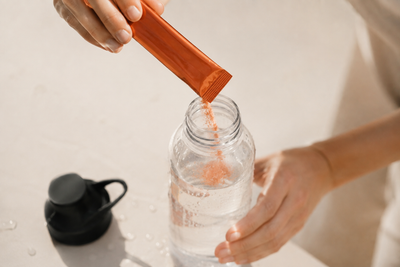
An MC2 sachet slips into the back pocket of your jersey next to your phone and a bar, and is poured directly into your water bottle at the start or at a water point along the way. No scale, no measuring spoon.
For a comfortable dosage, a 30g sachet in a 500 to 600ml water bottle gives an isotonic-like concentration, which remains easy to digest while pedaling. In a 750ml bottle, the same dose becomes more diluted, and thus faster to absorb, a logical choice in hot weather.
For a ride longer than two hours, prepare a second bottle of plain water in addition to the sweetened one: this prevents you from forcing yourself to drink a concentrated beverage just because it's the only available bottle.
Our cyclist collection includes the three flavors and the discovery box, useful for testing what works best during effort before buying a full box.
Comparison table
| Product | Price/serving | Sodium | Carbohydrates | Calories | Best for |
|---|---|---|---|---|---|
| Maple MC2 | $2.79 CAD | 273 mg | 28 g | 110 kcal | Regular training (1-3h) |
| Tailwind Nutrition | ≈$2.75 US | ≈303 mg | 25 g | Long rides, gravel, bikepacking (4h+) | |
| Skratch Labs | ≈$1.20 US | 400 mg | 19-20 g | 80 kcal | 2-4h rides, digestibility |
| OSMO | 160 mg | 9 g | Light hydration, heat, short rides |
How to choose based on your ride duration
If you ride for less than an hour, in the city or for leisure, water is sufficient in most cases.
If you train regularly, one to three hours, several times a week, that's where Maple MC2 makes perfect sense: a single source for energy and some electrolytes, without a long list of ingredients. Our cyclist collection includes the three flavors and the discovery box.
If your ride lasts three to four hours and you're looking for a proven formula in the cycling peloton, Skratch Labs offers a good compromise between carbohydrates and digestive tolerance.
If you're going gravel riding or bikepacking for four hours or more, aim for a higher-carb formula like Tailwind, capable of replacing part of your caloric needs directly in your water bottle.
Still hesitating between powdered sachets and ready-to-drink or tablet formats? Our comparison of the best hydration powders in Canada covers more brands and details the advantages of the powder format for transport.
Sodium, cramps, and heat: what you need to know on long rides

The amount of sodium lost during exercise varies enormously from one cyclist to another. A review of scientific literature on sweating in athletes places the concentration of sodium in sweat between approximately 230 and 1,600 mg per liter depending on the individual, a difference of nearly seven times between a "low-salt" and a "high-salt" sweater.
Two cyclists riding side-by-side on the same route can therefore have very different sodium needs. This is why the generic guidelines in this comparison, such as 30 to 90g of carbohydrates per hour, should be adjusted to personal experience rather than followed to the letter.
In practice, two signs are worth monitoring on the bike: white deposits of dried salt on your jersey or helmet after a ride in hot weather, and cramps that always return during the same long ride despite good water hydration. Both point to insufficient sodium intake rather than a lack of water.
Our article on how to prevent muscle cramps in sports details how to adjust your sodium intake according to your own sweat rate, beyond the generic figure of 273 mg per MC2 sachet.
Sachet or homemade recipe: what changes on the bike
Some cyclists prefer to prepare their own mix at home with water, salt, and maple syrup or sugar.
The calculation is not complicated, but it has to be redone every time: weigh the salt to reach the desired sodium, dose the sugar for the correct concentration, then transport everything in a container that won't leak at the bottom of a backpack or jersey pocket.
The pre-dosed sachet doesn't change the quality of the ingredient; it merely simplifies dosage and transport: the same amount of maple syrup and salt in each sachet, without a scale or measurement roadside.
For a cyclist who rides several times a week, it's often this detail that makes the difference between preparing their drink and skipping that step before heading out. Our complete comparison homemade vs. purchased sports drink details the dosage calculation and the real cost per serving of both options.
Frequently Asked Questions
In summary
On one hand, light formulas designed for pure hydration. On the other, drinks that combine energy and electrolytes for longer rides. For regular cycling training, one to three hours in the saddle, Maple MC2 remains our best natural cycling sports drink: maple syrup does most of the work, providing carbohydrates and some electrolytes, without adding anything artificial.
Discover the Maple flavor; Try all 3 flavors